Date Published 14 August 2026
Just when landlords were getting to grips with the first round of Renters' Rights Act changes, another new requirement was already waiting around the corner.
From late 2026, the Government intends to begin rolling out a new national Private Rented Sector Database across England.
Every private landlord will eventually need to register themselves and each property they rent out. Registration will be compulsory and landlords will also have to pay an annual fee, although the amount has not yet been announced.
The database will be introduced gradually by region, so we don't yet know exactly when landlords in Poole will be required to register.
However, we do know enough to start getting organised.
What is the Private Rented Sector Database?
The new database is intended to create a national record of private landlords and rental properties in England.
The Government says it will help tenants check that their landlord and property are properly registered. It will also give local councils more information to identify properties where safety requirements may not have been met.
In simple terms, it is likely to bring together information that landlords currently keep in several different places.
That could include ownership details, property information and important safety records.
Eventually, tenants and local authorities will be able to access relevant parts of the database, although public access will follow the initial landlord registration stage.
Is the database definitely happening?
Yes. The Renters' Rights Act provides for the creation of the database and the Government's current implementation roadmap says its regional rollout will begin from late 2026.
What we don't yet have is the complete instruction manual.
The Government still needs to confirm:
When each region must register.
The amount of the annual registration fee.
Exactly what information must be uploaded.
How often records will need to be checked or updated.
How letting agents will be authorised to act for landlords.
Whether information will transfer automatically from existing systems.
The precise registration deadlines and procedures.
That means landlords should prepare now, but be wary of anybody claiming they already know every final detail.
What information are landlords likely to need?
The Government has already indicated the minimum information it expects the database to contain.
For each landlord, this is expected to include contact and identity information. Where a property is jointly owned, details may be required for every joint landlord—not simply the person who normally deals with the letting agent.
For each rental property, landlords should expect to provide information including:
The full property address.
Whether it is a house or flat.
The number of bedrooms.
Whether it is occupied.
Whether it is furnished.
The number of households or residents.
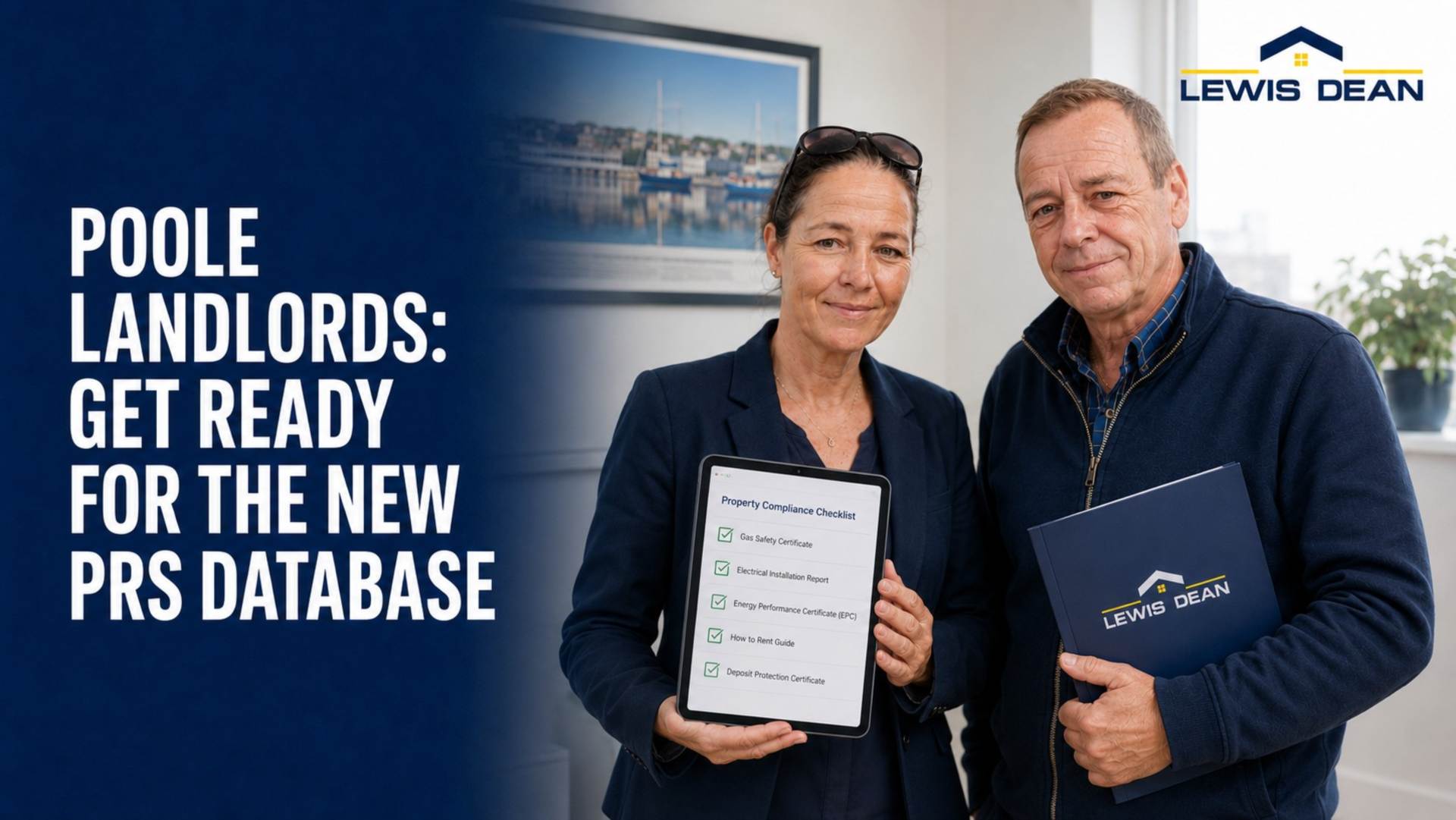
Gas safety information.
Electrical safety information.
Energy Performance Certificate details.
Further information could be added when the final regulations are published.
Start with the correct ownership details
This is one area where landlords can easily come unstuck.
The person who speaks to the letting agent or receives the rent isn't necessarily the only legal owner of the property.
A rental property might be:
Owned by one individual.
Jointly owned by a couple.
Owned through a limited company.
Held within a trust.
Owned by several family members.
Subject to probate or an estate arrangement.
Before registration begins, check that you know exactly who owns each property and that the information matches the Land Registry record, mortgage documents, insurance and tenancy paperwork.
If a limited company owns the property, make sure the registered company name, company number and registered office details are correct.
If the property is jointly owned, gather the current contact details for every owner.
It will be much easier to resolve discrepancies now than while trying to meet a registration deadline.
Check your property information
Landlords with one property may think this will be straightforward, but even simple information can become inconsistent over the years.
The address might be written differently across the tenancy agreement, safety certificates, Land Registry and insurance documents. A flat number may be missing, or the postcode may have been entered incorrectly.
Create one accurate record for each property containing:
The complete postal address.
The property type.
Number of bedrooms.
Current occupancy details.
Whether it is furnished or unfurnished.
The names of all legal owners.
The managing agent's details, if applicable.
The proposed system is also expected to make use of the property's Unique Property Reference Number, known as a UPRN. This is a unique number allocated to an address and helps distinguish between properties where addresses may be similar or recorded differently.
Landlords don't necessarily need to do anything with their UPRN yet, but it is another reason to make sure the exact property address is correct.
Keep digital copies—not only paper ones
The new system will be online, so landlords should expect to provide information digitally.
If your safety certificates are currently living in a drawer, filing cabinet or glovebox, scan them now and save them clearly.
Give each file a sensible name, such as:
12 Example Road – Gas Safety – Expires 14 March 2027
That is far more useful than six files called 'scan001.pdf'.
Create a separate digital folder for each property and include the property address in the folder name.Will a letting agent be able to register for the landlord?
This is one of the important details still being discussed.
The Lettings Industry Council has argued that authorised agents should be able to enter information and upload documents for their landlords.
That would make sense. More than half of private rental properties are let or managed through agents, and agents already handle much of the day-to-day compliance work.
However, we cannot yet assume that the final system will give agents complete access.
A landlord may need to create or verify their own account before granting their agent permission. There may also be certain declarations that only the landlord can make.
Landlords should therefore expect to remain legally responsible for ensuring their registration is correct, even if an agent helps with the administration.
Once the Government confirms the process, we will explain exactly what Lewis Dean can complete for our managed landlords and what each landlord will need to do personally.
What if several agents are involved?
Some landlords instruct more than one agent to market a property and then appoint a different agent to manage the tenancy.
The database will need to cope with that, but the final process has not yet been confirmed.
For now, make sure you have a clear record of:
Which agent currently manages the property.
Who holds the tenancy records.
Who deals with the deposit.
Who arranges safety certificates.
Who is responsible for renewing compliance documents.
Who has authority to arrange repairs.
Never assume another person is dealing with something simply because they have a copy of the paperwork.
Responsibility should be agreed and recorded.
Will this replace local property licensing?
Landlords should not assume the new database will automatically replace existing HMO, additional or selective licensing requirements.
The database is a national scheme, while property licensing is administered locally and applies according to the type and location of the property.
Unless the Government specifically confirms otherwise, landlords will need to comply with both where a licence is required.
Poole landlords should continue to check the current requirements applying through BCP Council, particularly if the property is occupied by several unrelated tenants or falls within an area covered by a licensing scheme.
What should Poole landlords do now?
There is no need to panic or attempt to register before the service is available.
There is also no benefit in waiting until the deadline is announced before looking for the paperwork.Another job—or an opportunity to get organised?
I completely understand why landlords may see the database as yet another administrative burden.
There has already been an enormous amount of change, and the idea of paying another annual fee to enter information the Government or local council may already hold is unlikely to receive an enthusiastic response.
If it is designed properly, however, the database could eventually make it easier to demonstrate that a property is safe and compliant.
The difficulty will be ensuring it doesn't become another system where landlords and agents repeatedly type in information that already exists elsewhere.
For now, the most sensible approach is preparation rather than panic.
Get the records together, check they are accurate and make sure nothing important is about to expire.
At Lewis Dean Letting Agents, we'll continue following the rollout and will update our landlords when the Government confirms what needs to be registered, when Poole is included and what we can complete on their behalf.
If you own a rental property in Poole, Upton, Hamworthy, Creekmoor or Canford Heath and you are unsure whether your records are ready, please speak to us.
No scare stories and no unnecessary waffle—just straightforward help getting your property organised before the next deadline arrives.